
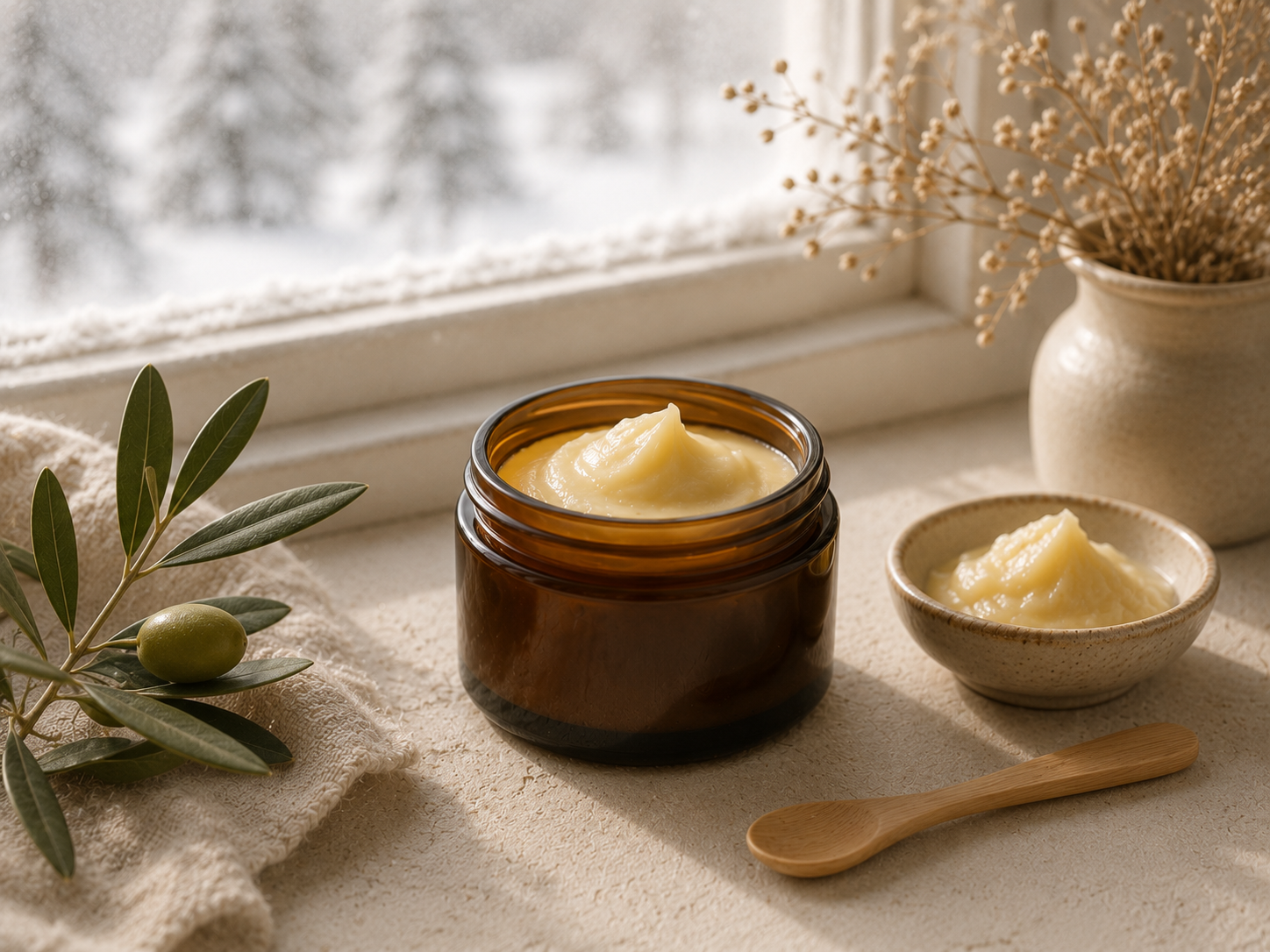
Winter changes the way skin behaves. Cold wind outdoors and heated air indoors reduce comfort, while hot showers and frequent handwashing can make dryness feel worse. A seasonal routine should focus on gentleness, moisture, and protection.
Start by shortening very hot showers. Use warm water and a mild cleanser only where needed. Long, steamy bathing may feel relaxing but can leave the skin increasingly tight afterward.
Moisturize immediately. For the body, apply lotion or cream while the skin is damp, then add balm to rough areas such as elbows, knees, heels, and hands. For the face, use a hydrating cream and press a tiny amount of balm over dry zones at night.
Do not forget the hands. Keep a balm or cream near every sink, and wear gloves when cleaning or spending time in cold weather. At bedtime, massage a richer layer into knuckles and cuticles.
Lips need a simple, protective product without irritating flavor or fragrance. Reapply before going outdoors and before sleep.
Continue sunscreen. Winter sun still reaches the skin, and snow can increase reflected exposure. Choose broad-spectrum protection and apply it to exposed areas.
Indoor humidity can help. If the air feels extremely dry, a clean humidifier may make the room more comfortable. Follow maintenance instructions carefully to prevent microbial buildup.
A winter routine should feel quieter than a summer routine, not more aggressive. Reduce exfoliation if the skin feels sensitive, avoid adding multiple new actives, and let rich textures do their work in thin layers.
The best winter skincare is not dramatic. It is a series of small protections repeated every day—warm rather than hot water, moisturizer before tightness begins, and a balm placed exactly where the season is most visible.