
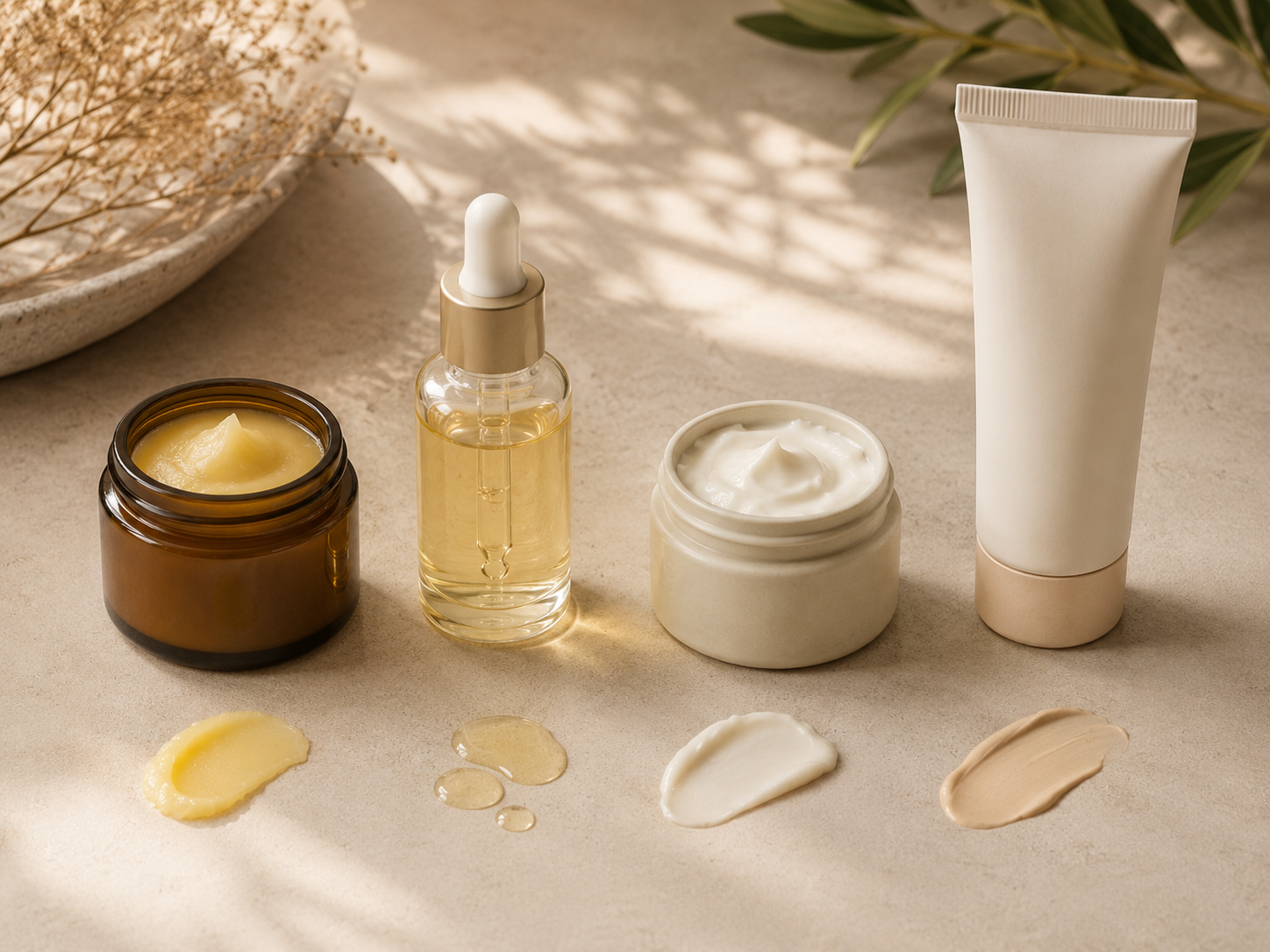
Layering skincare becomes easier when products are arranged from water-rich to oil-rich. A balm is usually the final moisturizing layer because it contains little or no water and creates a richer finish.
At night, begin with cleansing. Apply water-based serums or treatments next, following their directions. Then use a cream if your skin needs both water and oil. Finish with a small amount of balm on dry areas.
You do not always need both cream and balm. If the cream is rich enough, stop there. If your skin still feels tight, use balm as a targeted seal rather than another full-face layer.
In the morning, sunscreen should be the final skincare step before makeup. Because heavy balm can affect how some sunscreens set, use only a tiny amount underneath and allow it to settle. If pilling occurs, reduce layers or reserve the balm for nighttime.
Active ingredients deserve special care. Retinoids, exfoliating acids, and prescription products can have specific application instructions. Some are applied to dry skin; some are buffered with moisturizer. Follow the product label or clinician guidance rather than a universal layering chart.
Wait times do not need to become a ritual of ten-minute pauses. Give each layer enough time to spread and lose its wet surface. One or two minutes is often practical.
If the routine feels sticky or products roll into flakes, you may be using too much or combining incompatible textures. Simplify, reduce quantities, and test one change at a time. The purpose of layering is not to build the tallest stack. It is to place each product where it can perform comfortably. Water first, richer moisture later, sunscreen last in the morning—and only as many layers as your skin actually needs.