
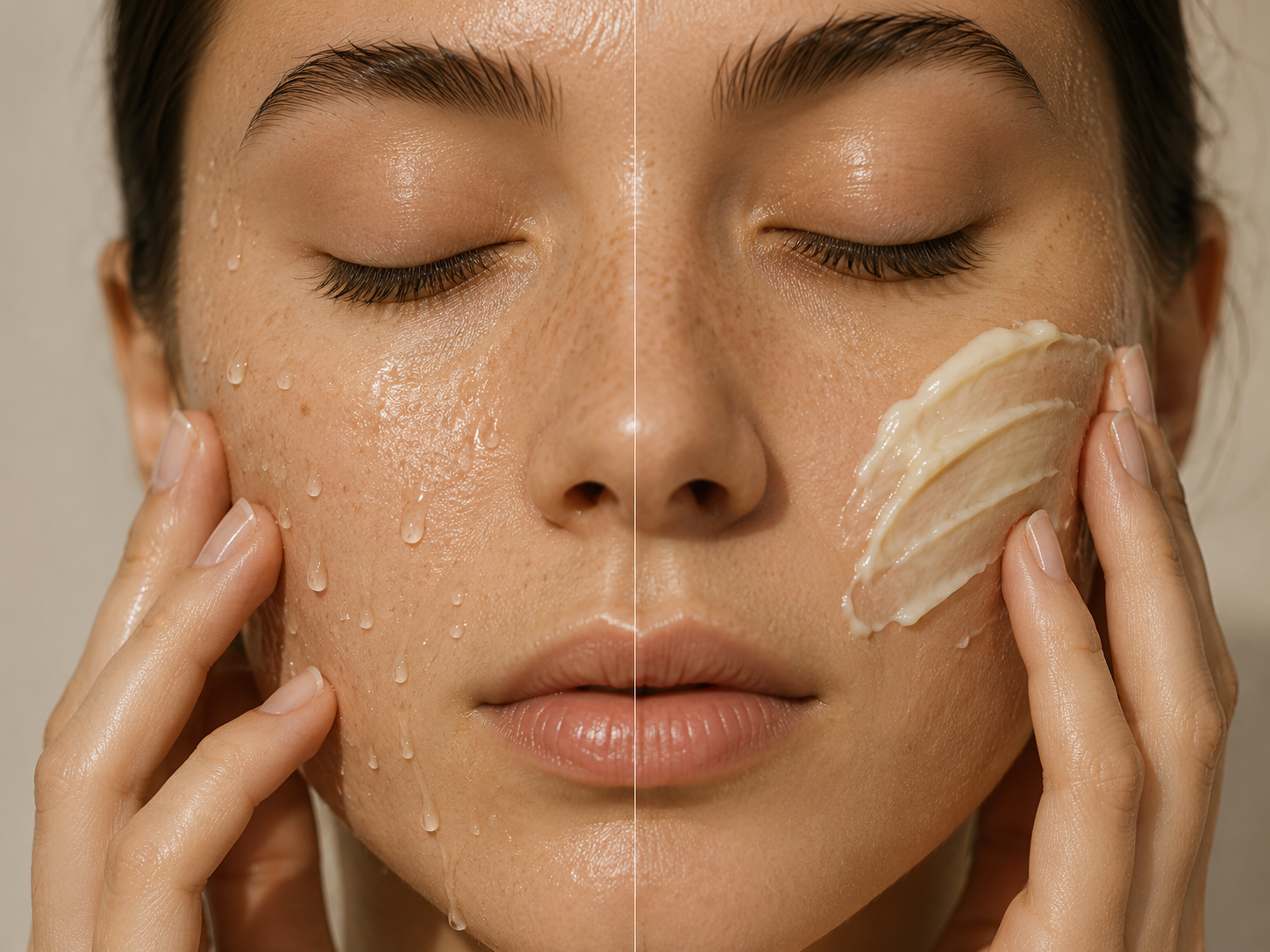
Dry and dehydrated are often used as if they mean the same thing, but they describe different experiences. Dry skin generally produces less oil, while dehydrated skin lacks water. A person can have dry, oily, combination, or normal skin and still experience dehydration.
Dry skin often feels rough, tight, or flaky and may be a long-term skin type. It tends to prefer creams, ointments, and balms that provide emollient oils and reduce moisture loss.
Dehydrated skin may look dull or show fine surface lines temporarily. It can feel tight even when the forehead or nose becomes oily. Weather, over-cleansing, low humidity, travel, and strong active products can all contribute.
The routines overlap but are not identical. Dehydration benefits from water-based hydration and gentler habits. A hydrating serum or moisturizer containing humectants can add water to the routine. An emollient cream or balm applied afterward helps slow evaporation.
Dry skin may need richer textures more consistently. A tallow balm can be useful as the final layer, especially on the cheeks, hands, or other rough areas. It does not supply water on its own, so applying it over damp skin is especially important.
If your skin feels both oily and tight, avoid assuming that it needs to be scrubbed more. Harsh cleansing can worsen the cycle. Use lukewarm water, reduce unnecessary exfoliation, and simplify the routine for a week or two.
Persistent flaking, itching, cracking, or inflammation may point to a skin condition rather than ordinary dryness. A dermatologist can help distinguish between them. Understanding the difference between dry and dehydrated skin makes product choices less confusing. One needs oil support, the other needs water support, and many people need a thoughtful combination of both.