
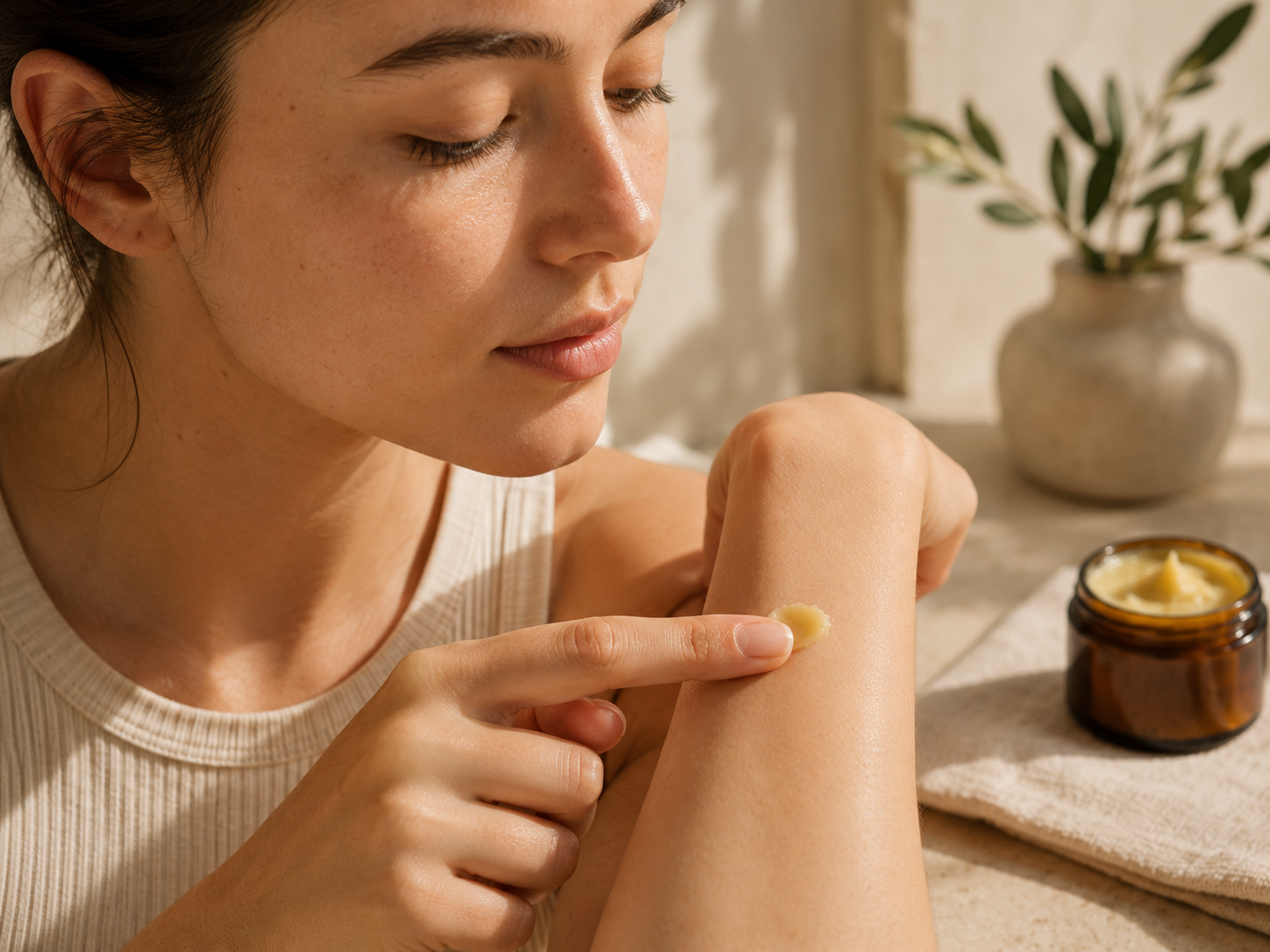
Patch testing is a small step that can prevent a much larger skincare problem. It cannot guarantee that a product will never cause irritation or breakouts, but it offers a cautious way to introduce something new.
Choose a small, discreet area that resembles the skin where you plan to use the product. For facial products, the side of the jaw or behind the ear is often practical. For body balms, the inner forearm can work.
Apply a tiny amount once daily for several days. Use the product exactly as you intend to use it—do not test a thick layer if your normal application will be thin. Avoid placing several new products on the same test area.
Watch for redness, itching, burning, swelling, persistent bumps, or discomfort. Mild awareness of a rich texture is not the same as irritation, but pain or worsening redness is a reason to stop. Wash the area gently and do not continue “pushing through” a reaction.
Patch testing for clogged pores is more difficult because congestion can take longer to appear. If you are acne-prone, introduce the balm to one facial area for one to two weeks before using it everywhere.
Read the ingredient list first. People with known allergies should not rely on patch testing as a substitute for medical advice. Avoid testing on broken, freshly shaved, or already irritated skin.
Once the patch test is complete, begin with a small amount and a low frequency. Use the product every other night or only on dry areas, then increase if your skin remains comfortable.
A slow introduction may feel less exciting than trying a new product immediately, but it gives you better information. Skincare should be curious, not reckless.