
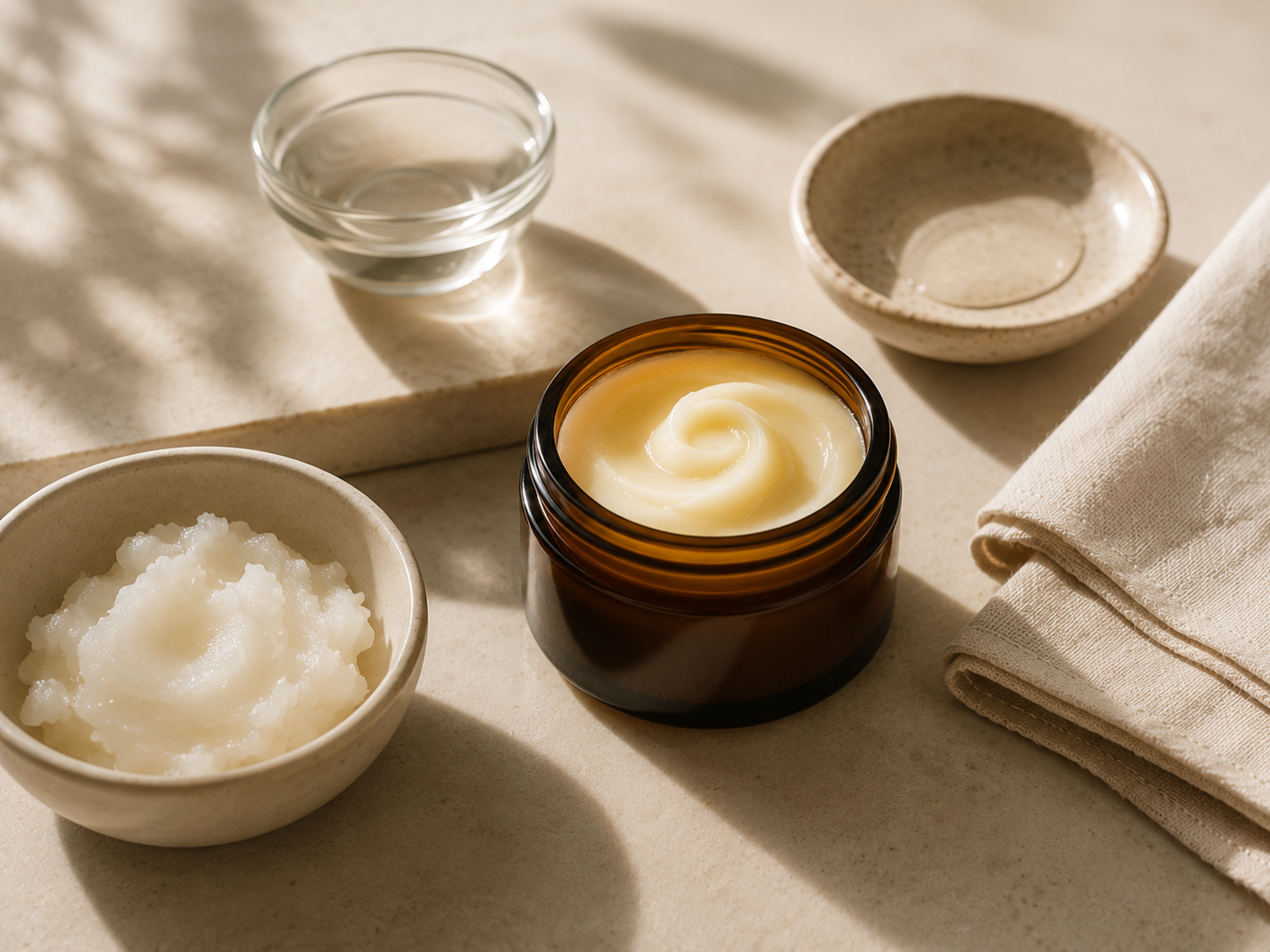
Fragrance-free skincare is often chosen by people who prefer a quieter sensory experience or who find scented products irritating. The label sounds simple, but it helps to understand what it does—and does not—mean.
“Fragrance-free” generally means the product has not been formulated with ingredients added primarily to create or mask a scent. It does not mean the product has no smell. Tallow, honey, plant oils, and waxes can each have a natural aroma, even when no perfume has been added.
“Unscented” can be different. In some products, masking fragrance may be used to neutralize the smell of raw materials. Reading the complete ingredient list provides more context than relying on front-label language alone.
Fragrance-free is not the same as hypoallergenic, and it cannot guarantee that a product will suit sensitive skin. People can react to preservatives, botanicals, oils, or other components. Patch testing remains useful.
For a minimalist balm, the absence of added fragrance allows the formula’s natural character to remain. Some batches may smell slightly different because natural materials vary. A mild ingredient scent that fades after application is not automatically a quality problem.
However, a strong sour, rancid, or unexpectedly changed odor can indicate that oils have oxidized. Stop use and contact the brand if the product seems abnormal.
Choosing fragrance-free skincare is often less about fear and more about preference. It creates a routine that does not compete with perfume, feels suitable for shared spaces, and keeps attention on texture and function. The label is useful when understood accurately: no added perfume, but still a real product made from ingredients with their own natural presence.