
Whipped and solid tallow balms may begin with similar ingredients, yet they create different experiences in the hand. The distinction is mostly about texture, air, and application—not necessarily about one formula being more effective than the other.
A whipped balm is aerated during production. Tiny pockets of air make it feel lighter and easier to scoop. It often melts quickly between the fingers and has a soft, cloud-like appearance. Because volume increases when air is incorporated, a full jar can feel surprisingly light.
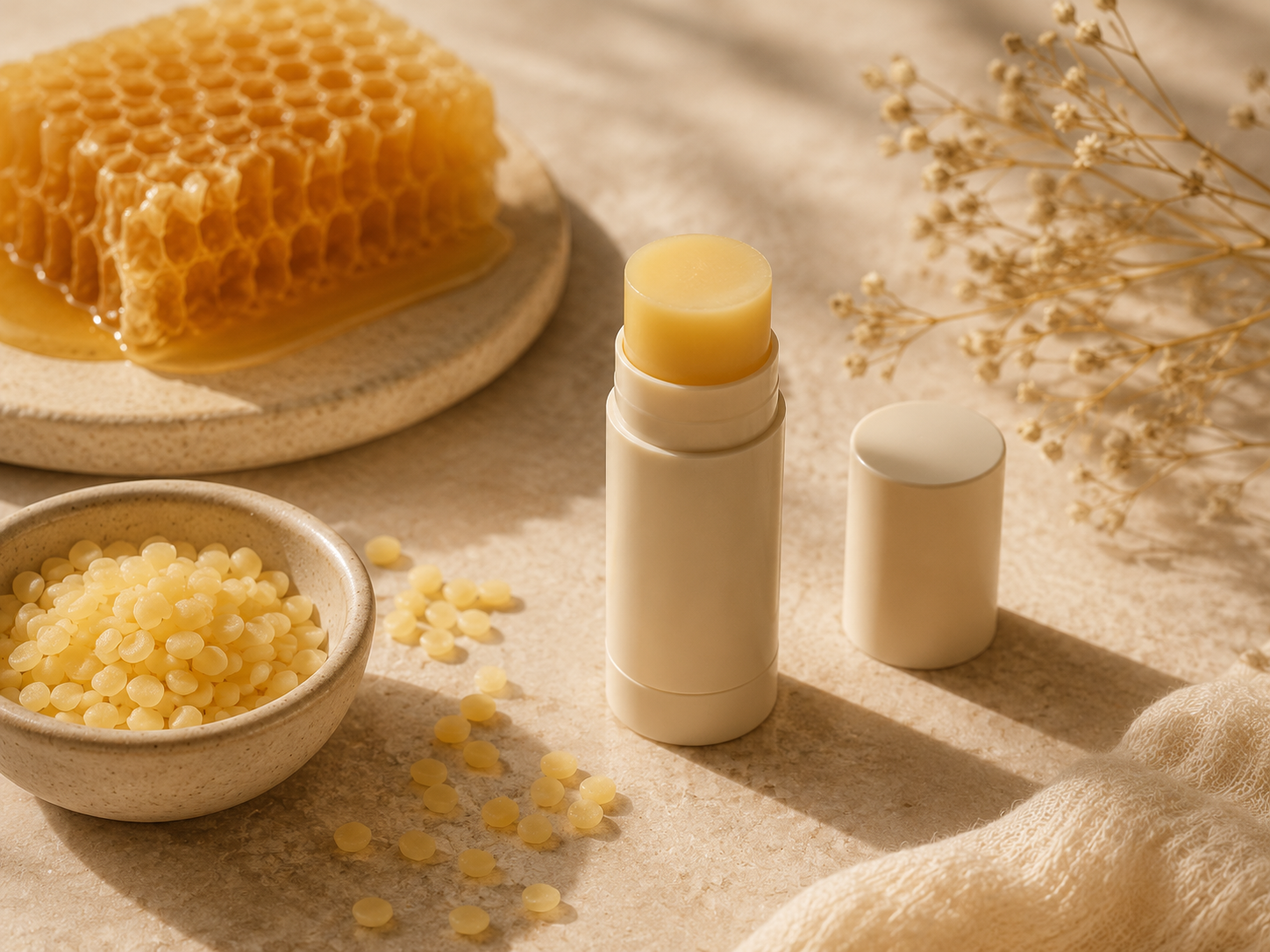
A solid balm is denser. It may have a smoother, waxier surface and often holds its shape better in warm conditions, especially when beeswax is included. Solid balms are common in sticks because they need enough structure to glide across the skin without collapsing.
The amount you use should be based on weight and coverage, not how large the scoop looks. A fluffy spoonful of whipped balm may contain less product than a dense scoop of solid balm. In both cases, start small.
Whipped formulas are especially pleasant for bedside use, hands, arms, and broader dry areas. Solid sticks are convenient for travel, elbows, knees, and quick targeted application. A jar offers a ritual; a stick offers speed.
Temperature affects both formats. Whipped balm can lose some of its airy structure if it melts and re-solidifies. Solid balm may soften in a hot car. These changes do not automatically indicate poor quality, but careful storage helps preserve the intended feel.
Choose based on how you live. If you enjoy warming product between your fingertips and taking a slower moment, a whipped jar may suit you. If you want something clean and portable, a stick may be the better companion. Texture shapes the experience, and the best formula is the one that makes daily use feel natural.