
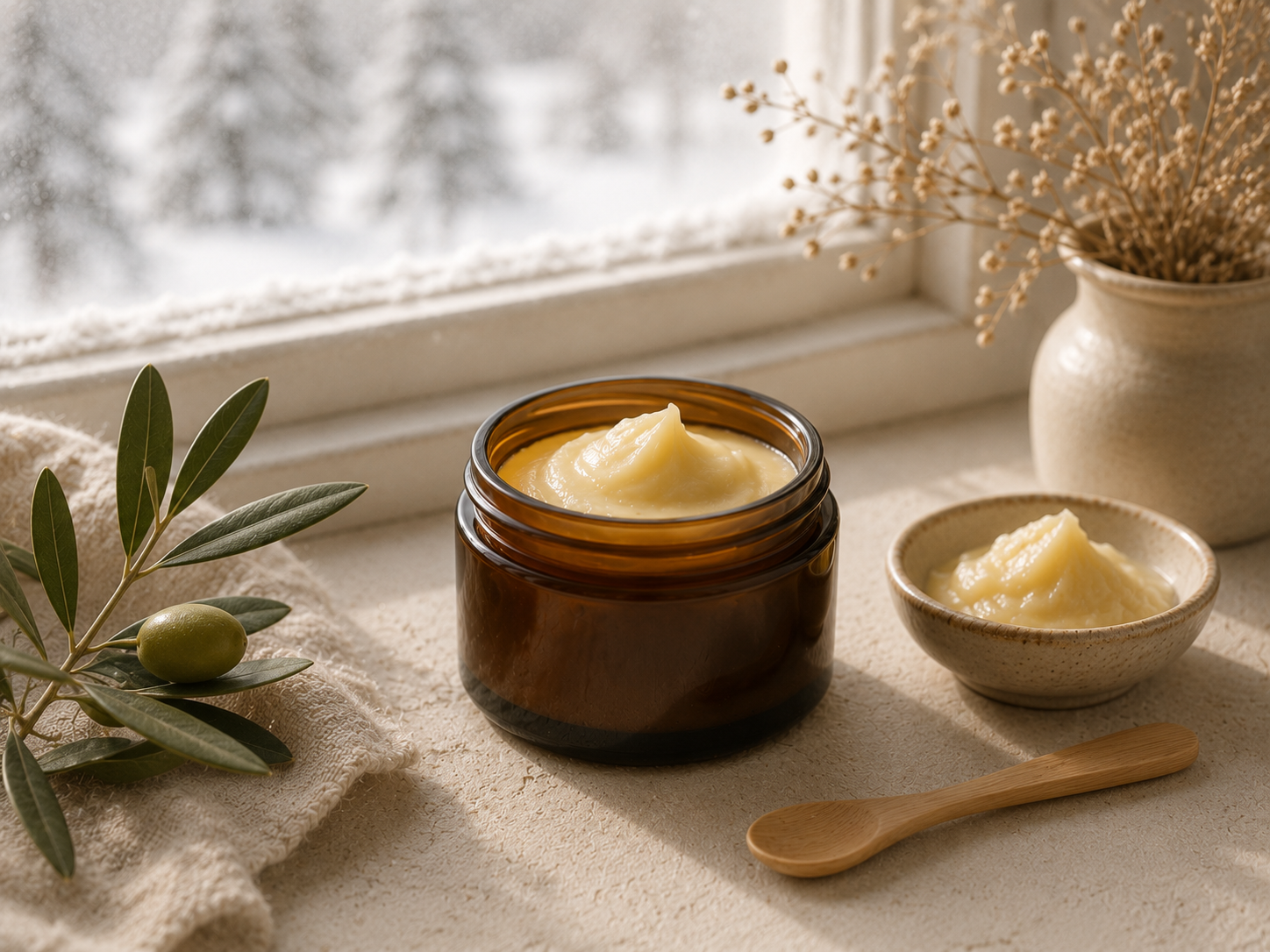
Tallow balm is often associated with cold weather, wool sweaters, and dry winter hands. That is when its rich texture feels most intuitive. But a balm does not become useless when the weather changes. The way you use it simply needs to change.
In winter, dry indoor heat and cold outdoor air can leave skin feeling tight. A balm can be applied more broadly after bathing or before bed. In summer, humidity and higher temperatures may make the same amount feel too rich. The solution is usually not to abandon the product, but to reduce the amount and use it selectively.
During warmer months, try tallow balm on areas that still experience dryness: cuticles, heels, elbows, knees, lips, and the backs of hands. It can also be useful after frequent handwashing or air travel, when climate-controlled spaces create unexpected dryness.
For the face, summer use depends on skin type and environment. Dry skin may still enjoy a thin nighttime layer. Combination skin may need it only around the mouth or on the cheeks. In humid climates, some people prefer to keep facial use occasional.
Storage matters more in warm weather. Keep the balm out of direct sunlight, hot cars, and steamy bathrooms. A cool cupboard helps maintain a pleasant texture. If it softens, it can still be applied with a clean spatula and a lighter touch.
Think of balm as a flexible tool rather than a seasonal rule. Heavy application may belong to winter, while precise application works well year-round. The jar can move from bedside table to travel pouch, from full-face moisturizer to cuticle balm, depending on what your skin needs.
Skincare is most effective when it adapts. Your summer routine does not have to look like your winter routine, even when some of the same products remain in it.