
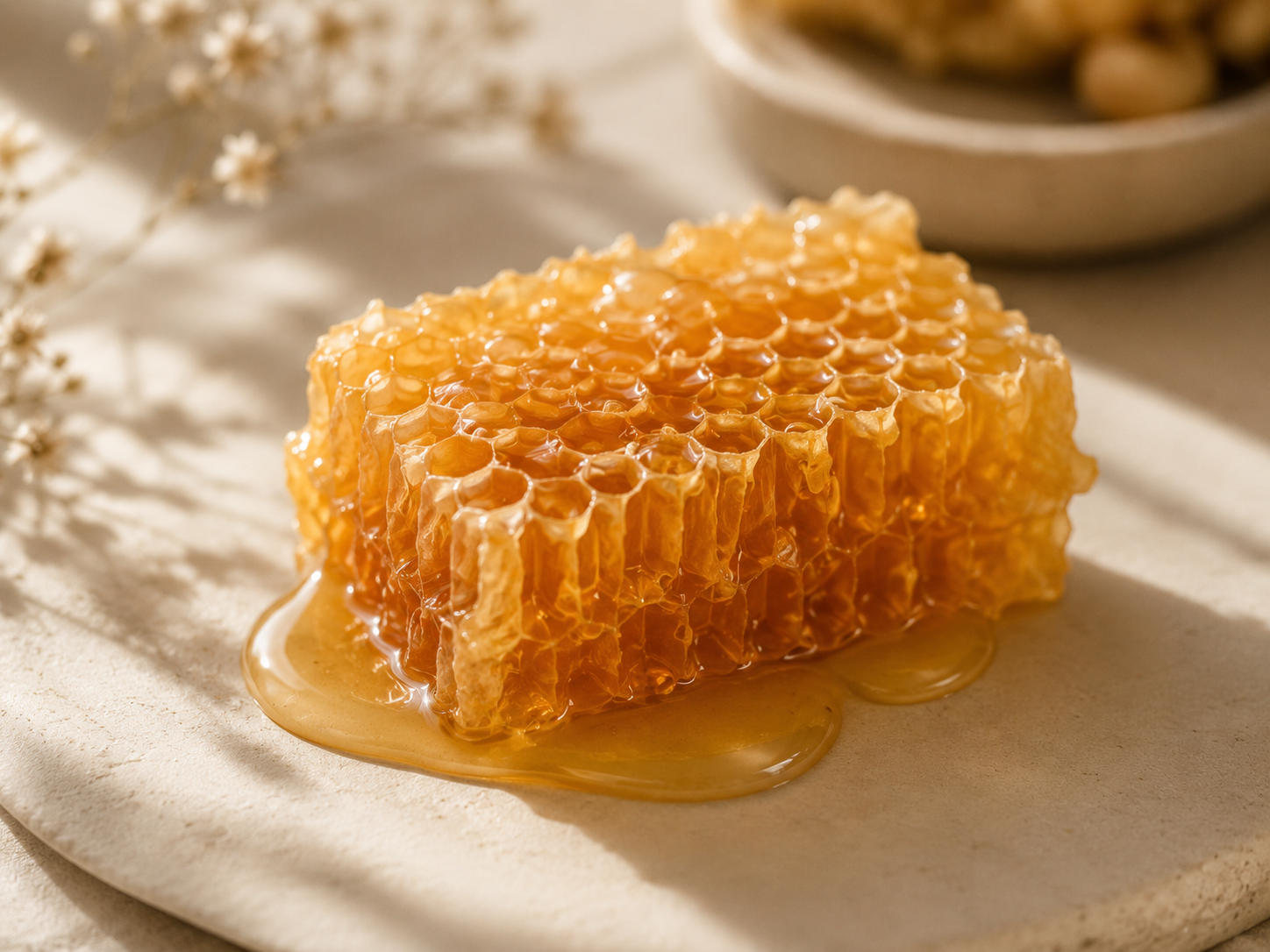
Honey has been used in personal care for generations, but its role in a balm is easy to misunderstand. In a water-free skincare formula, honey is included in a carefully controlled amount to contribute to texture, sensory experience, and the story of a simple ingredient blend.
Raw honey naturally contains sugars and small amounts of other compounds. It is hygroscopic, meaning it interacts with moisture in its environment. In a finished cosmetic balm, however, the effect depends on the entire formula. It should not be treated as if applying a spoonful of kitchen honey directly to the face would create the same result.
Formulation is important because honey and fats do not naturally blend with ease. A good product must keep the texture uniform enough for pleasant application. If a balm contains honey, warm a small amount between the fingers and spread it in a thin layer rather than expecting it to feel like a water-based serum.
Honey also gives a formula a familiar sense of warmth. Paired with tallow and plant oils, it fits naturally into minimalist skincare: recognizable ingredients, a rich texture, and a routine that does not feel clinical.
That does not make honey appropriate for everyone. Anyone with a known allergy to honey, bee products, or another ingredient in the formula should avoid use. Patch testing is a sensible first step, especially on facial skin.
It is also important to separate cosmetic language from medical claims. A honey balm can moisturize and soften the feel of dry skin. It should not be presented as a treatment for wounds, infections, eczema, or acne unless it is regulated and supported for those specific uses.
In a thoughtful tallow balm, honey is not there to perform magic. It is one part of a balanced formula—chosen for its character, compatibility, and the way it complements a rich, comforting skincare ritual.