
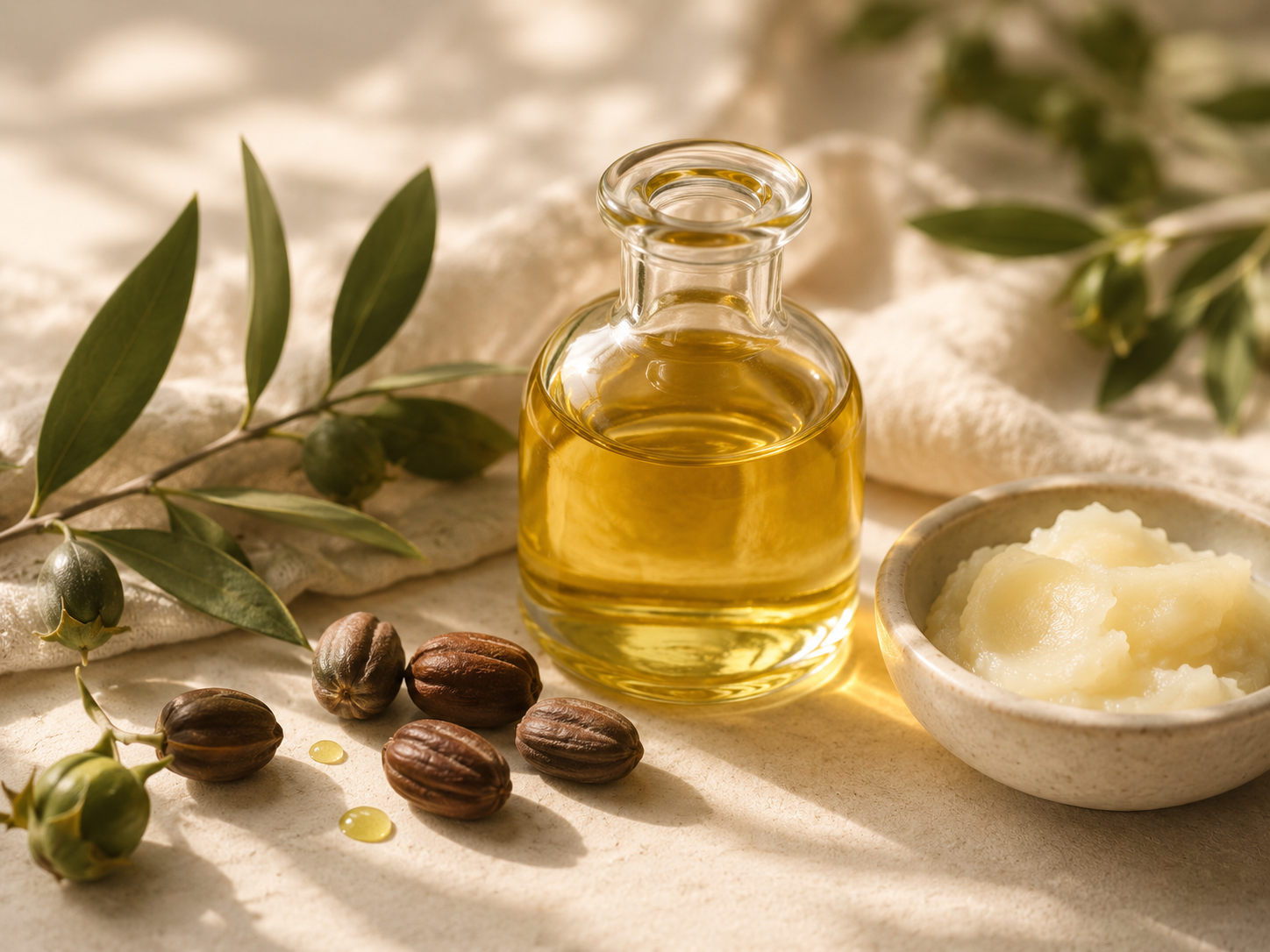
Jojoba is commonly called an oil, but chemically it is closer to a liquid wax ester. That distinction helps explain why it feels different from many heavier plant oils. It spreads easily, leaves a smooth finish, and is widely used in face, body, hair, and lip products.
In a tallow balm, jojoba oil can soften the overall texture and improve glide. Pure tallow can feel dense, especially in a cool room. A carefully chosen liquid oil makes the balm easier to scoop and distribute without taking away its rich character.
Jojoba is valued for stability as well as feel. Compared with some highly delicate oils, it is relatively resistant to oxidation. This does not mean it lasts forever or that packaging no longer matters, but it can support a formula designed for everyday use.
On the skin, jojoba works primarily as an emollient. It helps smooth the surface and reduces the rough, dry feeling that comes from a lack of comfortable oils. It does not “teach” the skin to produce less sebum, and it is not a guaranteed solution for acne. Those claims are often repeated online without enough nuance.
The best way to use a jojoba-containing balm is in a thin layer. Apply it after washing or over a water-based hydrator. The product should leave skin supple rather than slick.
People with sensitive or breakout-prone skin should still patch test. Even familiar, well-tolerated ingredients can cause individual reactions, and the complete formula matters more than a single ingredient in isolation.
Jojoba earns its place in minimalist skincare because it is versatile and understated. It does not need an exaggerated story. Its value is practical: elegant slip, a lighter touch, and a smoother bridge between dense balm and comfortable daily application.