
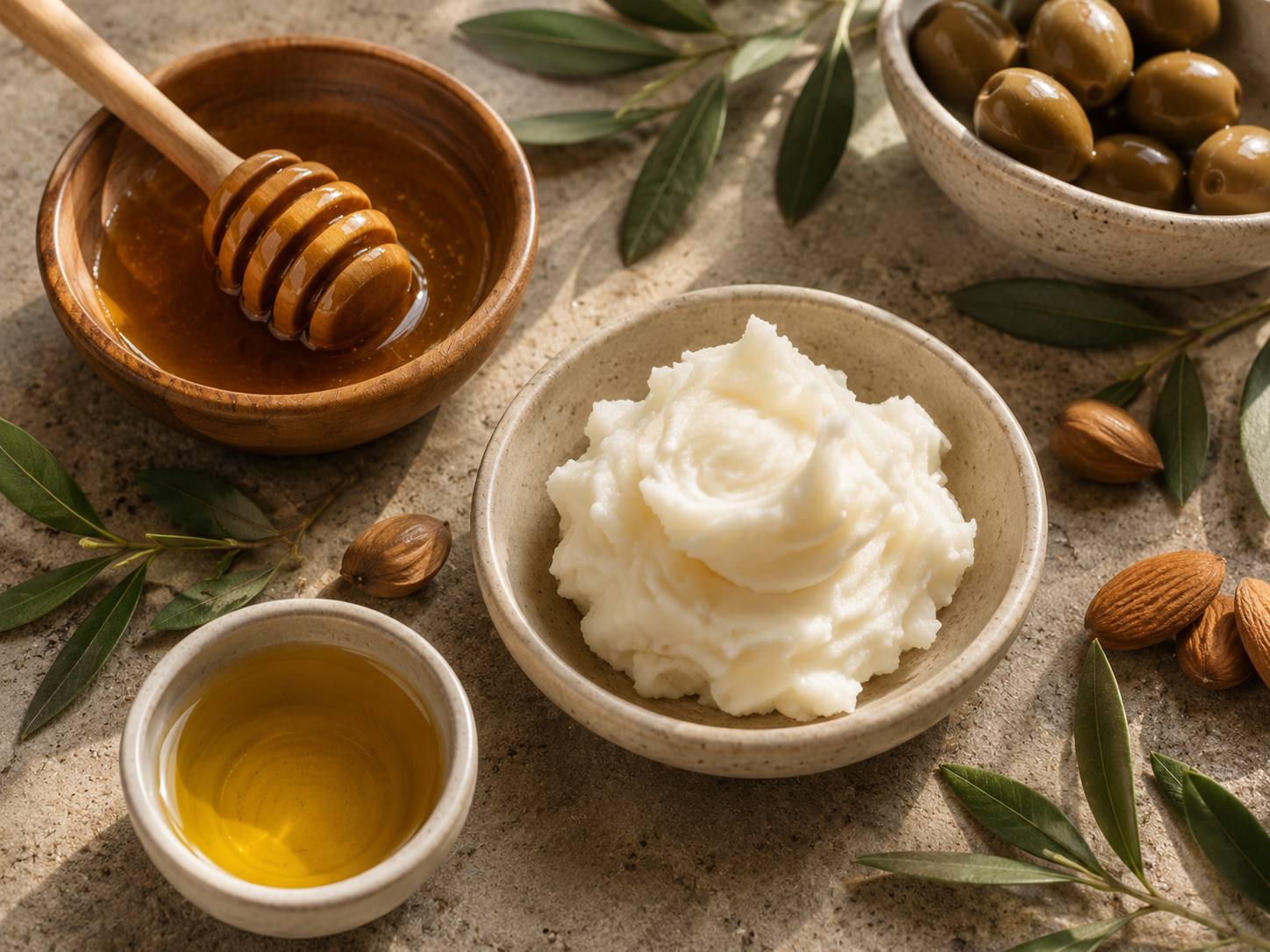
Open a natural balm in January and again in July, and it may feel like two slightly different products. In winter it can be firm and dense; in summer it may become soft or almost creamy. This change is usually a normal response to temperature, not a sign that the balm has spoiled.
Tallow and plant oils are made of fats with different melting points. When the room is cool, more of those fats remain solid. When the room warms, they soften. Because a water-free balm does not rely on the same stabilizing system as a conventional lotion, its natural texture can be more responsive to the environment.
If your balm feels too firm, warm a small amount between your fingertips before applying it. Avoid microwaving the jar or placing it directly on a heater. Excessive heat can damage packaging, alter texture unevenly, and expose the formula to unnecessary stress.
If the balm becomes very soft, move it to a cool, dry cabinet away from windows. Refrigeration is usually unnecessary and can make the product harder to use. A stable indoor location is enough for most homes.
Occasionally, melting and re-solidifying can create a slightly grainy feel. This happens when different fats cool at different speeds and form tiny crystals. The balm can still be usable if its smell, color, and overall condition remain normal. The grains usually melt as soon as they meet warm skin.
Use clean, dry hands or a spatula and keep the lid closed between applications. Water introduced into an anhydrous product can affect its quality, so avoid scooping balm with wet fingers.
Natural texture is part of the character of a simple balm. Instead of expecting it to behave like a highly processed cream in every climate, learn its seasonal rhythm. A few seconds of warming in winter and thoughtful storage in summer are often all it needs.