
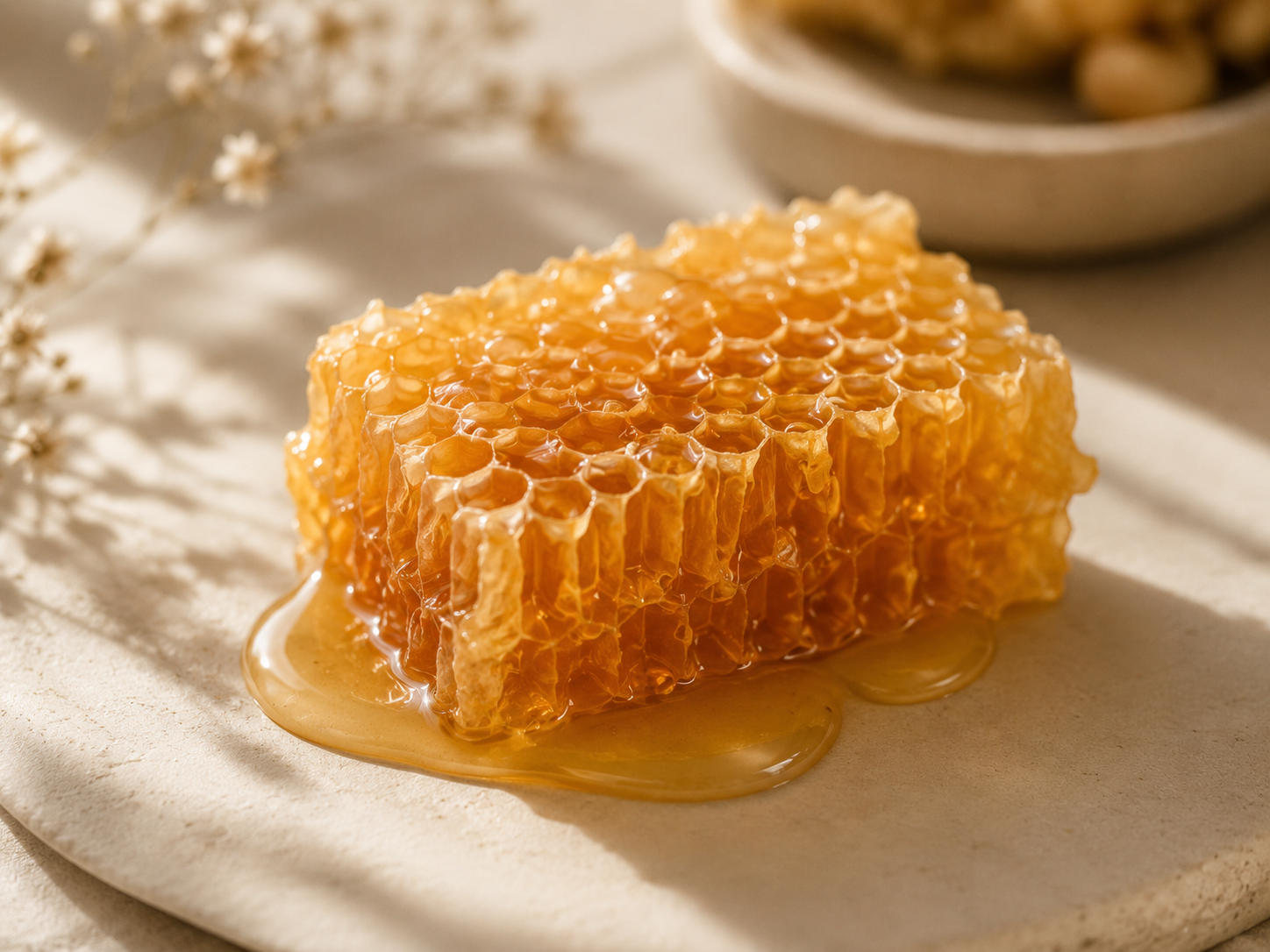
A balm stick needs to be firm enough to hold its shape, soft enough to glide, and stable enough to survive daily handling. Beeswax helps create that balance.
Beeswax is a natural wax produced by honeybees. In skincare formulas, it acts primarily as a structuring ingredient. It thickens oils and fats, raises the melting point, and gives a stick the strength to move in and out of its tube without turning into a puddle.
On the skin, beeswax contributes to a protective, occlusive feel. It helps the formula remain where it is applied and slows the loss of moisture from the surface. This is especially useful for targeted areas such as knuckles, cuticles, elbows, heels, and lips.
The amount matters. Too much beeswax can create drag and make a stick feel hard. Too little can make it collapse in warm conditions. A well-balanced balm glides with light pressure and leaves a thin layer rather than a thick waxy coat.
Beeswax also explains why stick products may feel firmer in winter and softer in summer. Warm the surface briefly against the skin before swiping, and avoid leaving the tube in a hot car or direct sunlight.
People who avoid animal-derived ingredients should note that beeswax is not vegan. Those with known sensitivity to bee products should also read labels carefully and seek individualized advice when necessary.
Beeswax is not included because it sounds natural or nostalgic. It performs a practical job that packaging alone cannot do. It turns a blend of tallow and oils into a portable product—one that can live in a handbag, desk drawer, or travel case and be applied without using fingers.