
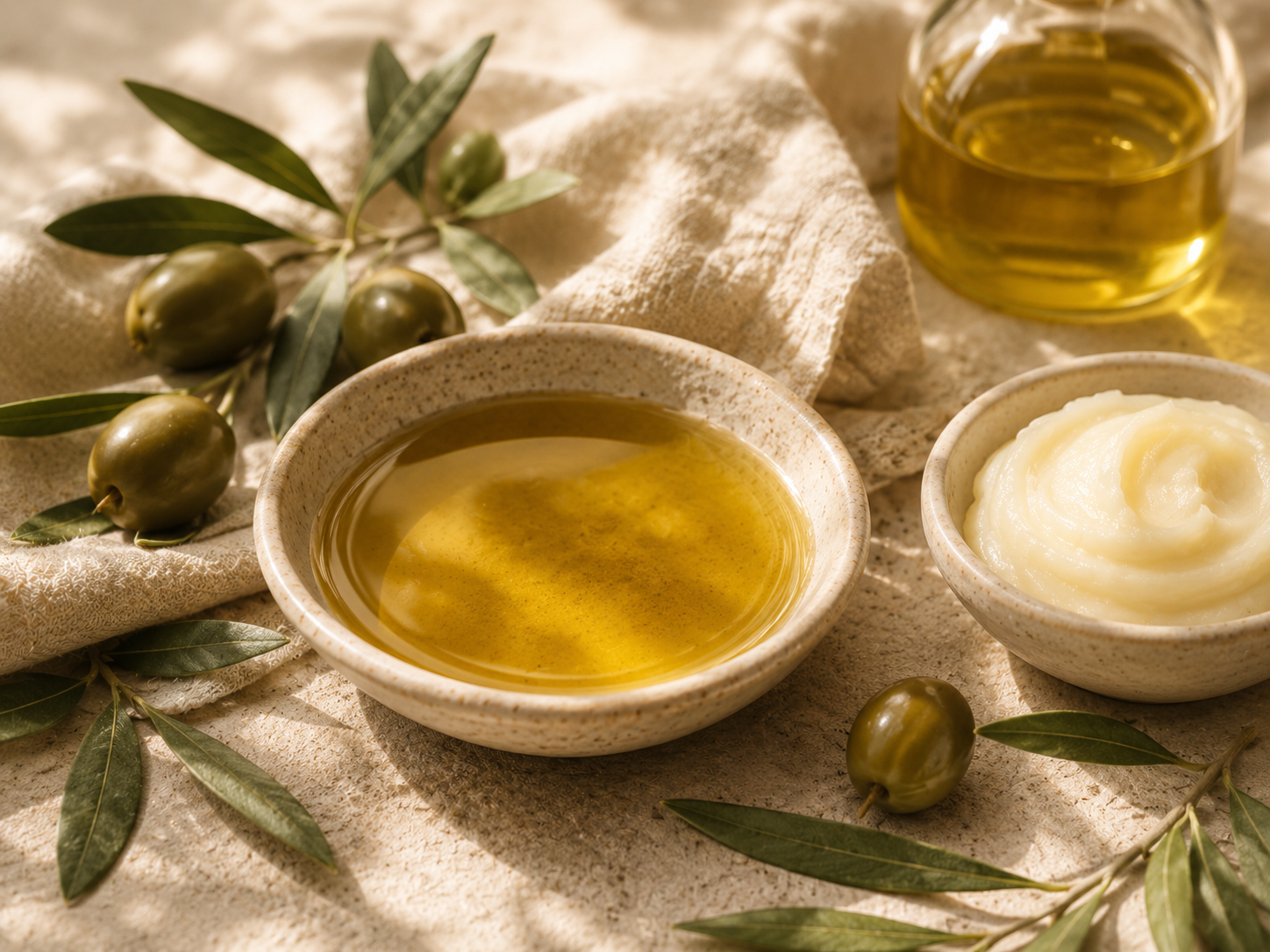
Olive oil is best known in the kitchen, but cosmetic formulators have used it for generations. In skincare, it is valued for its rich emollient feel and its ability to soften dry, rough areas when included in a balanced formula.
The important phrase is “balanced formula.” Applying cooking oil directly to the face is not the same as using a cosmetic balm made with olive oil. A finished product considers texture, concentration, compatibility with other ingredients, packaging, and how the blend behaves over time.
Olive oil contains a high proportion of oleic acid, which gives it a smooth, substantial slip. In a tallow balm, it can help the product melt across the skin and make a dense base easier to work with. It also contributes to the traditional, recognizable character of the formula.
Because olive oil can feel rich, a little goes a long way. People with dry body skin may enjoy it on hands, feet, and elbows. Facial use should be introduced gradually, particularly for skin that clogs easily or reacts to heavier oils.
Online discussions sometimes treat individual fatty acids as simple labels—good or bad—but skin response is more complex. The final formula, the amount applied, other products in the routine, and personal sensitivity all influence the result.
For the best experience, apply an olive-oil-containing balm over slightly damp skin. This helps the product spread in a thinner layer and supports a more comfortable finish. Store it away from direct heat and close the jar after use.
Olive oil belongs in skincare not because every pantry ingredient belongs on the face, but because formulators can use its texture and emollient properties thoughtfully. In the right blend, it becomes less like a kitchen shortcut and more like a supporting ingredient with a specific cosmetic purpose.