
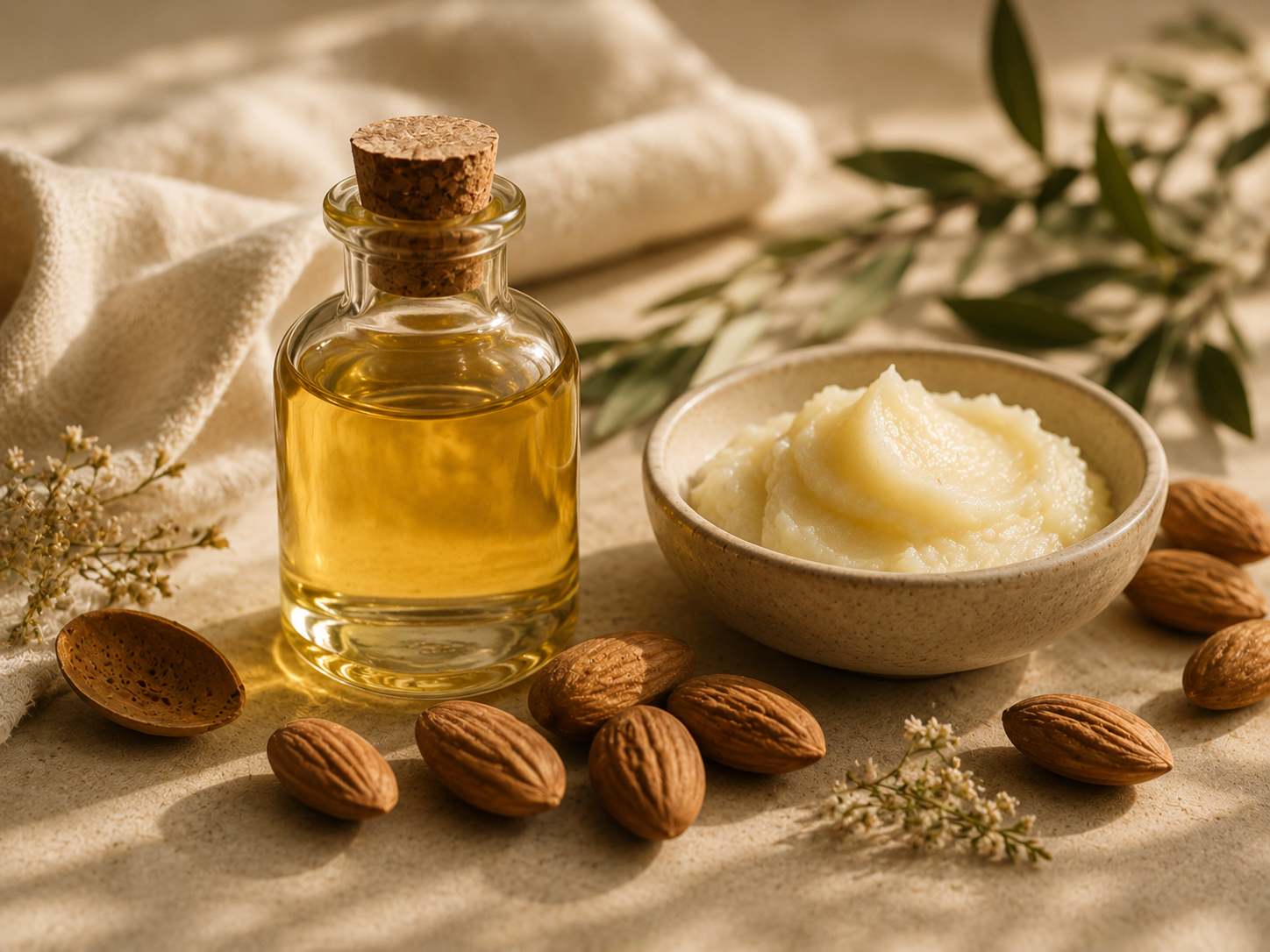
Sweet almond oil is a familiar ingredient in body oils, massage blends, creams, and balms. Its popularity comes from a simple quality: it gives formulas a soft, easy slip and helps dry-feeling skin feel more flexible.
The oil is pressed from sweet almonds and contains a mixture of fatty acids, with oleic and linoleic acids among the most prominent. In skincare, it acts as an emollient. That means it fills in the tiny spaces between rough surface cells and creates a smoother feel.
Within a tallow balm, sweet almond oil helps balance density. Tallow provides body and richness, while the plant oil makes the blend easier to spread. The result can feel more refined than either ingredient used alone.
Sweet almond oil is especially pleasant in products intended for hands, elbows, knees, and other areas that become rough through washing, weather, or friction. It can also be used in facial products, although the complete formula and individual skin response remain important.
People with nut allergies often ask whether almond oil is safe for them. Allergy risk depends on factors including refining and residual proteins, and personal medical history matters. Anyone with a known almond or tree-nut allergy should consult a qualified clinician before using a product that contains almond-derived ingredients rather than relying on general advice.
As with all natural oils, freshness and storage affect quality. Keep products away from heat and direct sunlight, close the lid securely, and avoid introducing water into the jar.
Sweet almond oil is not the loudest ingredient in a balm, and that is part of its appeal. It supports texture, comfort, and spreadability. In a minimalist formula, those quiet functions matter just as much as the ingredients that receive the biggest headlines.